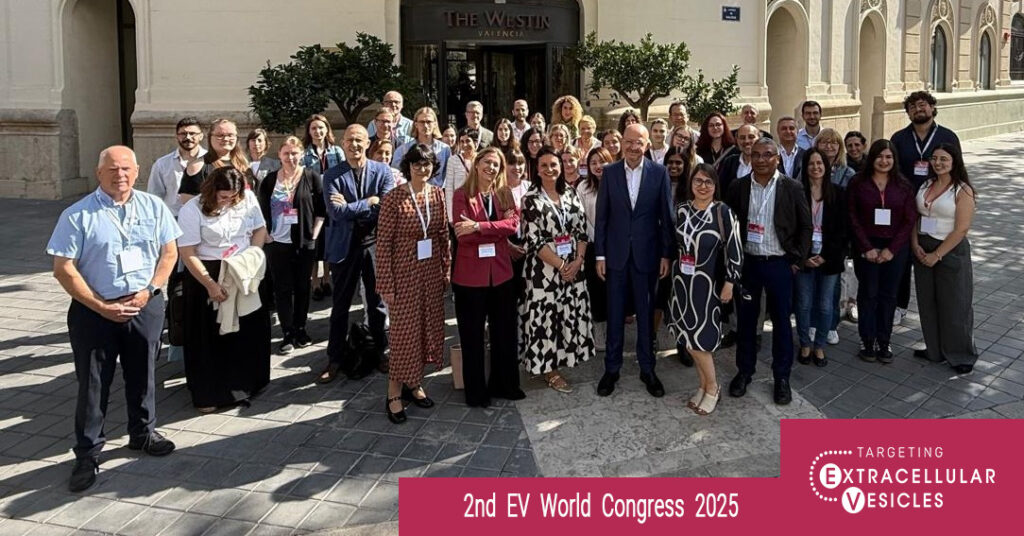
Valencia, Spain – Targeting Extracellular Vesicles 2025 has successfully concluded, bringing together international experts to explore how extracellular vesicles (EVs) are redefining biological communication, disease mechanisms, and therapeutic innovation.
Across two days of high-level scientific exchange, the meeting highlighted EVs as active regulators of systemic biology, connecting mitochondria, microbiota, immune networks, and host tissues. Speakers presented cutting-edge data demonstrating how vesicular communication underlies adaptation, aging, inflammation, and organ homeostasis.
A strong emphasis was placed on translation: moving from EVs as biomarkers to engineered vesicles as therapeutic tools, drug delivery systems, and modulators of immune and metabolic responses. Discussions also stressed the importance of integrating EV research with multi-omics strategies, artificial intelligence, and systems medicine, accelerating the shift from static models toward dynamic, precision medicine.
Beyond scientific advances, Targeting EVs 2025 reinforced the strength of an international and interdisciplinary community committed to collaboration, data sharing, and responsible innovation. A shared message clearly emerged:
EVs are not just messengers they are drivers of biological coordination and future medical interventions.
Looking Ahead
The dialogue initiated in Valencia will continue at the next edition of Targeting EVs, which will take place in Porto, Portugal.
The upcoming meeting will be held under the presidency of Carla Lopes, University of Coimbra, and will further expand the translational, clinical, and systems-level impact of extracellular vesicle research.